
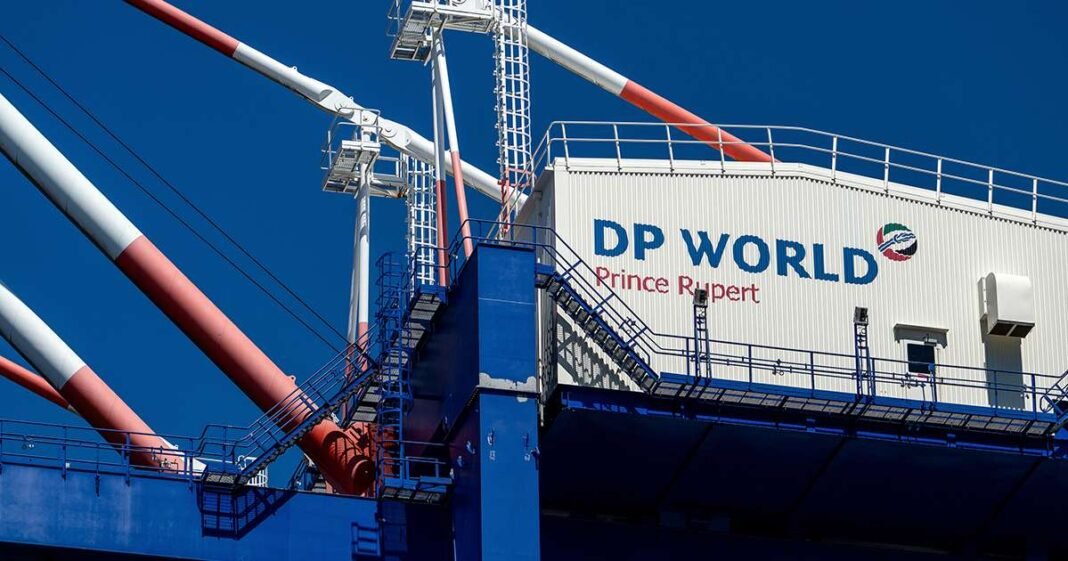

(James MacDonald/Bloomberg)
February 13, 2026 8:20 AM, EST
| Updated: February 13, 2026 10:46 AM, EST
DP World Ltd. CEO and Chairman Sultan Ahmed Bin Sulayem resigned after two companies, citing his alleged ties to disgraced financier Jeffrey Epstein, suspended business with the logistics giant.
Bin Sulayem, who’s led the Dubai-owned port operator since 2019, kept up a relationship with the convicted pedophile before and for more than a decade after Epstein’s jail sentence in 2008 on charges that included procuring a minor for prostitution.
DP World named Yuvraj Narayan as the new CEO and Essa Kazim as chairman, it said in a statement on Feb. 13.
The relationship between Bin Sulayem and Epstein emerged in a series of emails released by the U.S. Department of Justice and others obtained by Bloomberg News last year. At least two government-linked investment funds have halted deals with DP World, deepening the fallout.
British International Investment, a 9.9 billion-pound ($13.6 billion) development-finance institution owned by the U.K. government, said it suspended investments with the company over the allegations. Canadian pension fund Caisse de Depot et Placement du Quebec — a major financial partner in several DP World projects — said that it was halting future investment plans with the firm.
The emails show the two men exchanged intimate messages, contacts in business and politics, and attempted to broker deals for one another.
Neither bin Sulayem nor representatives for DP World responded to repeated requests for comment over the email exchanges.
La Caisse said it “will move quickly to work with DP World’s new leadership to continue our partnership on port projects around the world.”
DP World has activities in 83 countries, with over 119,000 employees. The company runs and operates the Middle East’s largest port at Jebel Ali in Dubai, the London Gateway in the U.K., logistics sites in the U.S. and facilities across Africa.
Bin Sulayem, a Dubai businessman educated at Temple University in Philadelphia, served in numerous government-linked roles in the emirate over the last two decades. He was one of the many executives who lost their jobs in the aftermath of the global financial crisis when Dubai neared default over its ability to repay property-related debt.
In a previous high-profile role, bin Sulayem headed real estate developer Nakheel PJSC, the builder of Dubai’s famed palm-shaped islands.

