
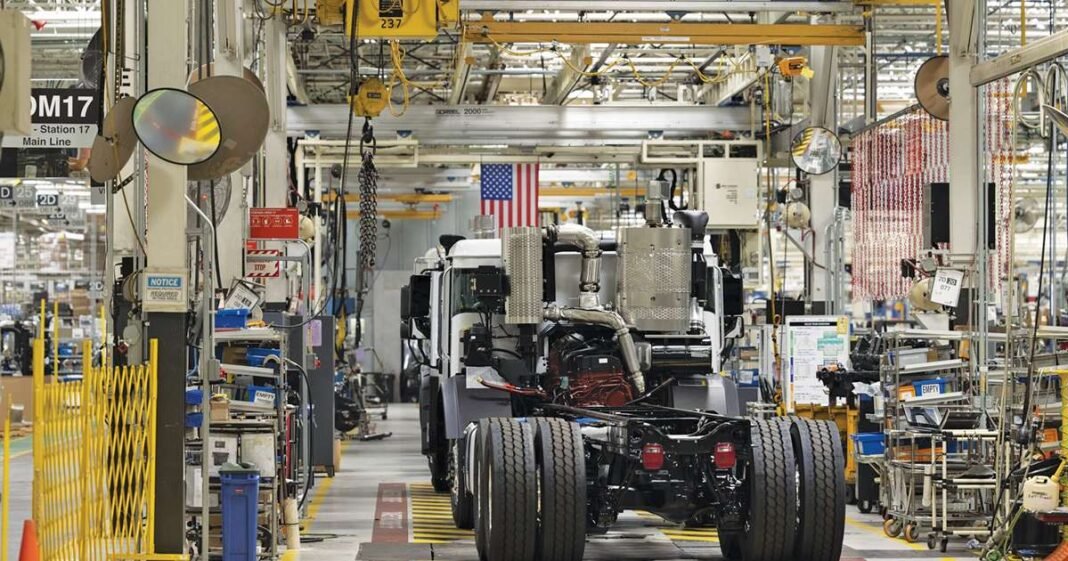

ACT Research released a follow-up report concluding that the recent improvement in order activity suggests optimism is growing for 2026. (Ryan Collerd/Bloomberg)
February 12, 2026 2:35 PM, EST
Key Takeaways:
- Class 8 truck orders rose year over year in January but declined from December.
- Analysts attribute recent gains to stronger economic activity, rising spot rates and greater EPA 2027 clarity.
- Manufacturers remain cautiously optimistic for 2026 despite weak freight profitability and lingering risks.
North American Class 8 truck orders increased from the prior year in January, with recent market trends spurring cautious optimism among analysts.
ACT Research preliminary data showed orders increased 20% year over year to 30,800 units. But the data also showed orders fell 27.8% sequentially from 42,684 units. ACT Research has been pointing to better-than-expected economic activity and less uncertainty as possible factors driving the improvements in order activity since December.
“After a weak October and November, a few things have happened that, in our thinking, have helped spur recent order activity,” said Carter Vieth, research analyst at ACT Research. “The U.S. economy continues to outperform expectations, clarity surrounding EPA ’27 bolstered demand, and arguably most importantly, since the end of November, we’ve seen a sustained run up in spot rates after three successive Midwest snowstorms.”
ACT Research soon after released a follow-up report concluding that the recent improvement in order activity suggests optimism is growing for 2026. The report found that artificial intelligence and wealth-driven economic growth helped absorb the overcapacity at the end of 2025.
“January orders were strong, reflecting large fleets returning to more typical ordering patterns as confidence improved,” said Jonathan Randall, president of Mack Trucks North America. “We’re optimistic about the year ahead while recognizing the market will likely settle into a steadier pace.”
(Act Research)
The Q2 2026 BlueGrace Logistics Confidence Index rose sharply quarter over quarter, signaling improved consistency in shipper expectations, even as growth remains measured. The index concluded that a recent rebound in revenue and orders indicates stronger demand visibility. But it also noted that order expectations reflect normalization instead of an acceleration, with changes in sentiment signaling wait-and-see behavior.
“The U.S. and Canadian Class 8 orders showed continued strength in January, with activity being reported at 28,404 units,” said Magnus Koeck, vice president of strategy, marketing and brand management at Volvo Trucks North America. “After the softness we saw in October and November, it’s encouraging to see two consecutive months of growth.”
Koeck noted that the regular purchase cycle for major fleets was delayed in the back end of 2025 and suspects this trend spilled over into January. He warned that even if some slight improvements in spot rates occurred, freight rates and profitability would still remain at low levels.
Transport Topics reporters Eugene Mulero and Keiron Greenhalgh examine the critical trends that will define freight transportation in the year ahead. Tune in above or by going to RoadSigns.ttnews.com.
“I believe it’s too early to tell if this uptick in orders the last two months will be a sustainable trend going forward,” Koeck said. “Let’s see. I’m cautiously optimistic that we’ll see a more stable demand environment as we progress through 2026, with the fourth quarter being the strongest. As a 100% U.S. manufacturer, Volvo Trucks is well positioned for this cycle with our new Volvo VNL and Volvo VNR, giving customers the fuel efficiency and uptime they need in a challenging market to keep their total cost of operation as low as they can.”
FTR Transportation Intelligence reported that Class 8 preliminary net orders for January increased 27% year over year to 32,500 units, marking the second consecutive month that trended above the prior year. But the report also showed a sequential decrease of 24%. It found the on-highway market made up the bulk of the month-to-month decline. But both on-highway and vocational markets contributed significantly to the year-over-year increase.
“Some stabilization and improvement in the freight market since late 2025 also may have provided modest support at the margin, but fleet profitability and capital discipline remain binding constraints,” said Dan Moyer, senior analyst of commercial vehicles at FTR. “Purchasing behavior continues to be replacement-driven with only modest early EPA 2027 influence. Lingering downside risks include fragile freight fundamentals, elevated cost pressures, geopolitical uncertainty and broader macroeconomic risk.”

