
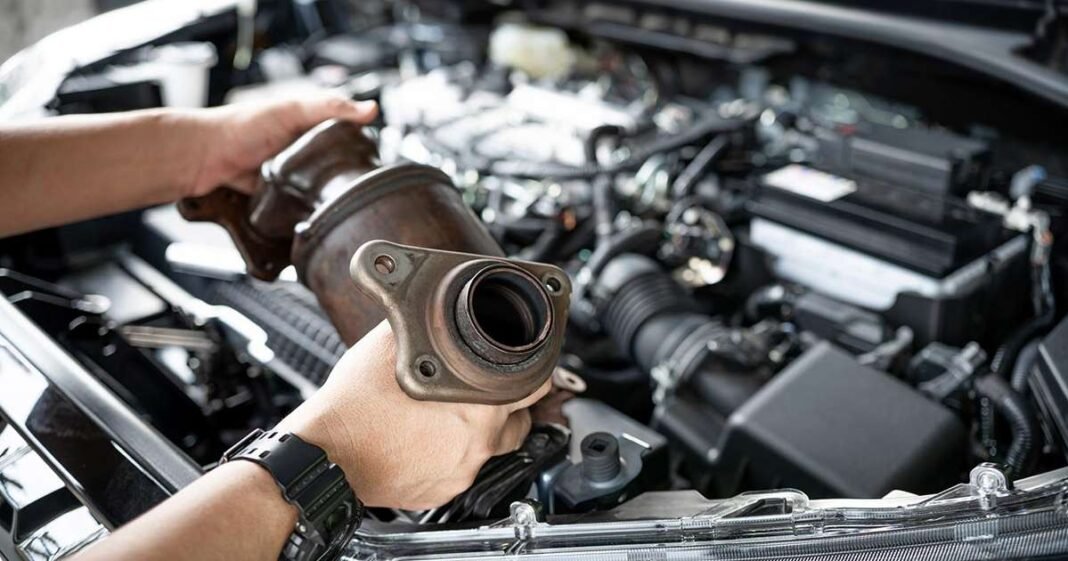

The PART Act also would facilitate enforceability of laws around the theft of a catalytic converter and categorize as a criminal offense such thefts. (NongAsimo/Getty Images)
February 11, 2026 3:07 PM, EST
WASHINGTON — Legislation designed to prevent thefts of automotive catalytic converters took a meaningful step on Feb. 10.
The House Commerce, Manufacturing and Trade Subcommittee easily approved the bill, paving the way for its consideration as early as this month on the Energy and Commerce panel.
The Preventing Auto Recycling Theft (PART) Act, sponsored by Reps. Betty McCollum (D-Minn.) and Rep. Jim Baird (R-Ind.), has received bipartisan backing since its introduction last year.
The bill would require new vehicles to have an identification number stamped onto converters. It also would facilitate enforceability of laws around the theft of a catalytic converter and categorize as a criminal offense such thefts.
During the bill’s subcommittee consideration, Rep. Gabe Evans (R-Colo.) expressed his support: “My constituents deserve real solutions, which the PART Act helps to deliver with a national framework to combat catalytic converter theft.”
Rep. Debbie Dingell (D-Mich.), a senior member of the committee, added, “By approving traceability and transparency in the resale market, this will help deter theft, protect consumers and equip law enforcement with the tools they need.”
Subcommittee Chairman Gus Bilirakis (R-Fla.) pointed to the measure’s potential safety benefits. At the panel’s markup, policymakers considered other transportation-centric bills expected to be included in this fall’s comprehensive highway policy reauthorization.
“The members of this subcommittee understand better than anyone that there is no partisan way to save lives. In 2024, nearly 40,000 people died on our roadways. That number is staggering — but what matters most is what it represents: families forever changed, milestones never reached and seats left empty around kitchen tables. That reality should drive our work here today,” Bilirakis said, adding: “Meeting this moment requires practical solutions to strengthen motor vehicle safety and empower [National Highway Traffic Safety Administration] to succeed in its mission.”
Good news: The PART Act is moving forward!
It’s advancing to the full House E&C Committee—an important step in protecting consumers and small businesses from catalytic converter theft.
Contact your Member of Congress and ask them to co-sponsor the PART Act.
— NADA (@NADAUpdate) February 10, 2026
Lawmakers and stakeholders have indicated the legislation responds to growing concerns about the nationwide thefts of the devices. Its primary sponsors explained the bill’s aim. “Catalytic converter theft continues to be a common and costly problem across the nation and specifically in the Twin Cities,” McCollum said last fall as part of a statement accompanying the bill’s introduction. She is a member of the Appropriations Committee. “I am pleased to join my Republican colleague [Rep.] Baird in reintroducing the PART Act. By working with auto manufacturers in writing the regulations to properly track catalytic converters, the PART Act gives law enforcement the tools they need to prevent this crime.”
“These thefts can have devastating financial consequences on Americans and business owners, and it has become a significant problem in Central Indiana,” said Baird, a senior member of the Agriculture Committee. “I first introduced the PART Act after hearing from numerous constituents and local law enforcement officers about the growing prevalence of catalytic converter thefts.”
Transport Topics reporters Eugene Mulero and Keiron Greenhalgh examine the critical trends that will define freight transportation in the year ahead. Tune in above or by going to RoadSigns.ttnews.com.
American Trucking Associations and the National Automobile Dealers Association are among stakeholders urging the legislation’s enactment. Last month they wrote to the House subcommittee’s leadership: “We respectfully urge the House Energy and Commerce Committee to protect consumers and small businesses from catalytic converter theft and include the PART Act in the upcoming surface transportation reauthorization legislation.”
“As you may be aware,” stakeholders continued, “catalytic converters contain valuable metals, such as rhodium, platinum and palladium. Thieves can easily and quickly steal catalytic converters from vehicles, and since they are not readily traceable, there is a lucrative market for these stolen parts.”
A version of the measure was introduced in the Senate this summer by Sens. Amy Klobuchar (D-Minn.) and Bernie Moreno (R-Ohio). A committee of jurisdiction has yet to schedule its consideration.

