

“People are dying right now,” Michigan Rep. Debbie Dingell said during the Feb. 10 House session. (Graham Hughes/Bloomberg)
February 10, 2026 4:10 PM, EST
Key Takeaways:
- The House Energy and Commerce Committee advanced the SAFE Exit Act, aimed at requiring manual door releases in vehicles with electric handles.
- The measure follows multiple incidents, including fatal Tesla crashes, where electric door systems failed and occupants could not escape.
- Some lawmakers support the bill’s goals but want flexibility for safety experts to determine technical standards.
U.S. lawmakers agreed to advance an automotive safety bill that would require manual door releases in new vehicles with electric handles, bringing the measure — which could affect designs popularized by Tesla Inc. — a step closer to becoming law.
The Securing Accessible Functional Emergency Exit Act, or SAFE Exit Act, was forwarded to the full committee during a markup session on Feb. 10 by the House Committee on Energy and Commerce. The bill still must clear several legislative hurdles and may not ultimately be signed into law.
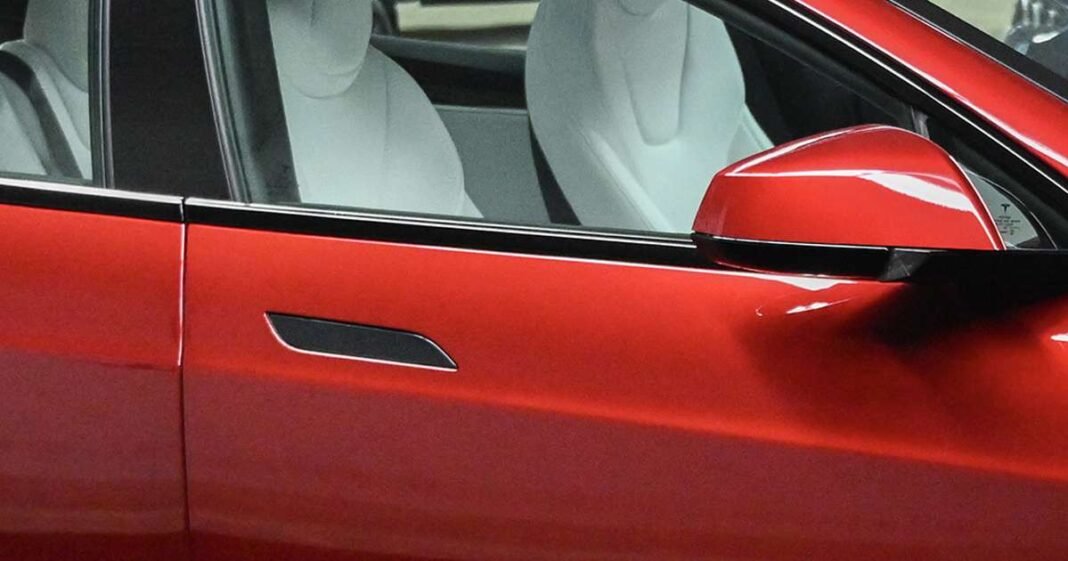
The bill, introduced last month by Rep. Robin Kelly, an Illinois Democrat, aims to address safety concerns following numerous incidents in which people were injured or died after becoming trapped inside a vehicle with electric handles that stopped working.
Bloomberg News has reported extensively on modern door systems, including an investigation that found at least 15 deaths in a dozen incidents in which occupants or rescuers couldn’t open the doors of a Tesla that crashed and caught fire. The National Highway Traffic Safety Administration opened an investigation in September into whether the doors are defective in certain Tesla Model Y SUVs, and in December opened a probe into the emergency releases in Tesla Model 3 vehicles.
“People are dying right now,” Michigan Rep. Debbie Dingell said during the Feb. 10 House session. “As more vehicles rely on electronic door latches, we have to make sure there’s always a clear manual backup when these systems fail.”
The bill would require automobiles with electric door systems to have a clearly labeled, readily accessible mechanical latch that is intuitive to use. It also calls for a way for first responders to access vehicles upon loss of power.
Kelly warned that the United States is falling behind on door‑safety standards compared with China and the European Union. China recently passed a bill banning concealed door handles in electric vehicles, becoming the first country to outlaw the design.
Florida Congressman Gus Bilirakis said he agreed with the intent of the legislation but argued it should allow safety experts to conduct research to set flexible standards and avoid unintended consequences.

