
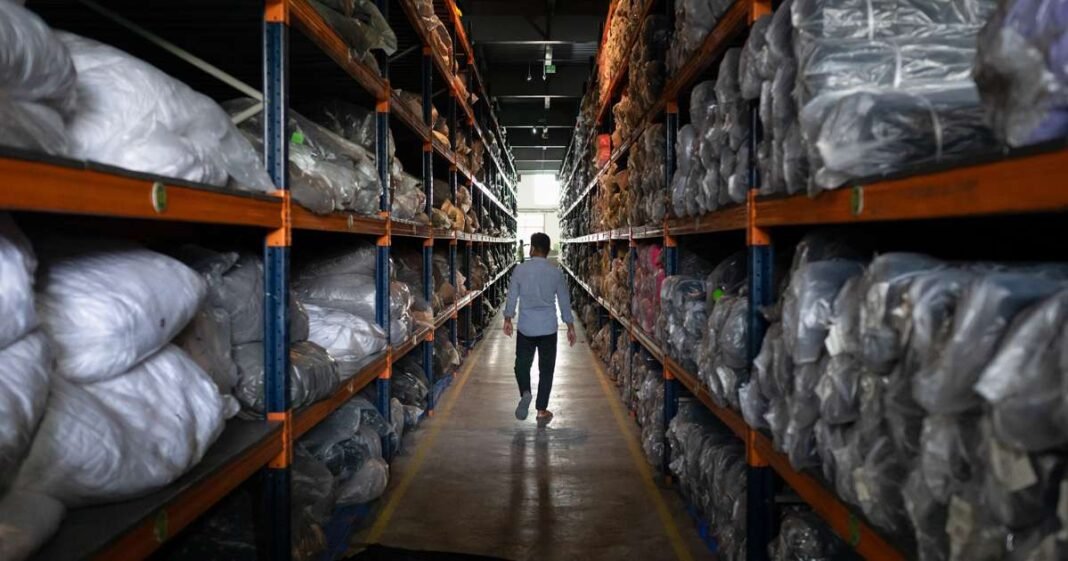

Raw materials sit stacked in a warehouse inside a garment factory in Narayanganj, Bangladesh. (Fatima Tuj Johora/Bloomberg)
February 9, 2026 2:44 PM, EST
Key Takeaways:
- The U.S. will lower its reciprocal tariff on Bangladeshi goods to 19% while adding an exemption for some textile products.
- Bangladesh will expand access for U.S. industrial and agricultural goods and address regulatory barriers.
- The deal includes commitments on environmental labor and intellectual property protections as well as future commercial agreements.
The U.S. is moving to reduce its so‑called reciprocal tariff on goods from Bangladesh and is offering a new exemption for textile products, the White House said Feb. 9, in the latest adjustment for the South Asian country.
President Donald Trump will lower the country’s overall reciprocal tariff to 19%, after previously cutting the rate from 37% to 20% last year. The deal also includes a mechanism that allows some textile merchandise to receive a full exemption from the levies, providing a break to Bangladesh’s apparel industry.
The mechanism will apply to “certain textile and apparel goods from Bangladesh using U.S.-produced cotton and man-made fiber,” interim Bangladesh leader Muhammad Yunus said in a social media post.
The agreement will see Dhaka provide preferential market access to U.S. industrial and agricultural goods, including chemicals, medical devices, auto parts, energy and farm products. The nation also is committing to address some of its non-tariff barriers limiting U.S. sales, including accepting vehicles that comply with U.S. regulations and pharmaceuticals authorized by the U.S. government.
Bangladesh also agreed to environmental, labor and intellectual property protections.
“The agreement will provide U.S. and Bangladeshi exporters unprecedented access to each other’s respective markets,” the White House said in a statement.
The White House also said it anticipated upcoming commercial deals between the two countries, including the procurement of aircraft, a purchase of $3.5 billion in U.S. agricultural products, and a $15 billion energy purchase over the next 15 years.
The deal is the latest in a spate of trade agreements hammered out between the U.S. and other countries, including India and Argentina.

