
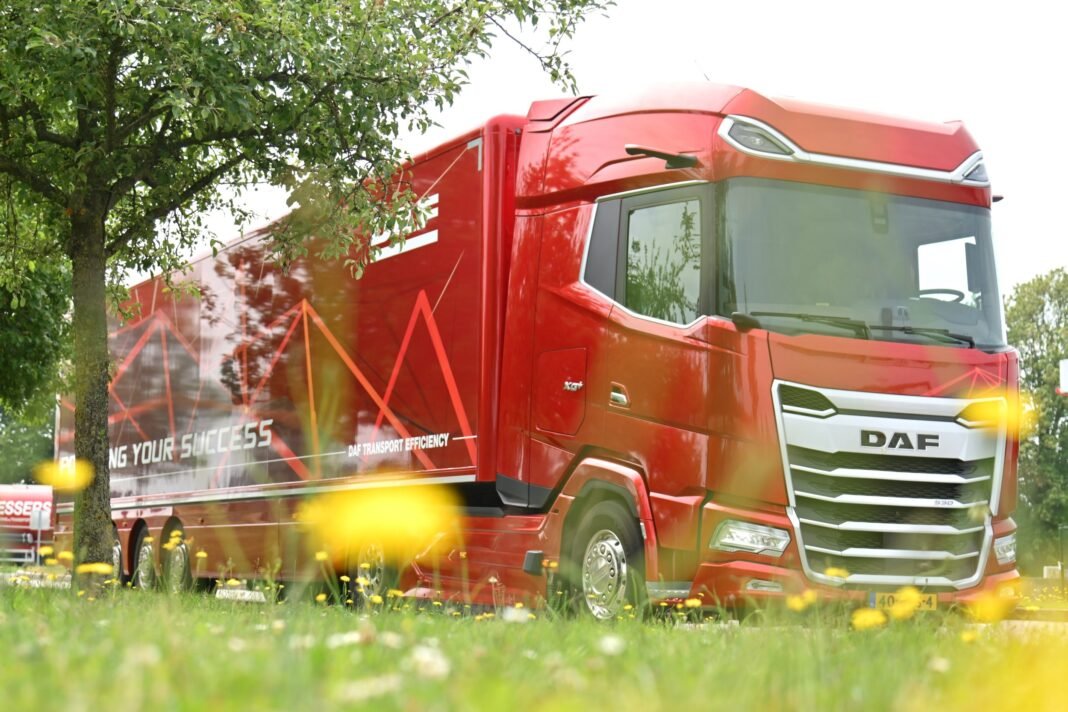

In June 2021, DAF launched its new range of heavy trucks, with the XG+ as its flagship. It was a bold move by DAF to be the first manufacturer to make use of the new European regulations that allow larger cabins, provided that aerodynamics are improved. A real gamble…, but completely successful!
With 16 cm extra length, the DAF XG+ has a new silhouette, but more importantly: it offers the driver 33 cm extra interior depth. In four years, this cabin was again refined aerodynamically, although this is barely visible to the naked eye.
Powertrain. The MX 11 and MX 13 engines were further optimized with a new turbo, new pistons, a new water pump and a modified air compressor. But most expectations went to the injectors. They were a source of problems and downtime for too long. DAF has responded with new injectors for model year 2025. At the same time, DAF is also applying the Miller process to the injection system. That is not really new, because the system has been around since the 1950s: thanks to the special profile of the cams that operate the intake valves, the combustion chamber remains open longer. The positive consequence of this is less energy loss, because the apparent compression ratio decreases.
A dream cabin
Cabin. The entry is identical for the XF, XG and XG+, via three steps. The engine tunnel is still present, but very limited (5 cm). In total, the XG+ cabin offers a volume never seen before: 12.5 m³ and an interior height of 2105 mm! The extra depth also benefits the beds and storage options, such as the classic side compartments that are accessible from the outside, or the refrigerator. The beds can be adjusted in different ways to turn the cabin into a real living space.
In terms of ergonomics, DAF has become a reference, because the new dimensions make it possible for every driver to find his ideal driving position. The extra seat backrest in particular is decisive here. With the previous generation, drivers with a large stature sometimes felt a bit cramped, because DAF never wanted to compromise on sleeping comfort. That dilemma is now a thing of the past.
The modern steering wheel includes numerous controls and all driving functions are now grouped on the left side. Another point that drivers particularly appreciate: the steering wheel is widely adjustable in different directions. With its extra 16 cm, the dashboard is revolutionary in terms of dimensions, without deterring lovers of simplicity. The flat work surface is more spacious, there are more storage compartments, including a new pull-out drawer under the central storage compartment. And for traditional users: don’t panic, the legendary table is still there!
Top-level visibility
Visibility is excellent thanks to the windscreen, which has a lower beltline, increasing the glass area by 33%. And it doesn’t stop there, because the lateral glass surface also grew by 15%. These values can be further enhanced with the optional window opening in the passenger door. With a ‘cinema’ style passenger seat, i.e. foldable, visibility is really optimal.
Driving impressions. The main screen of the dashboard offers a new layout of information: the tachometer remains on the right and is displayed in the shape of a capital D. The screen, which you can configure from the steering wheel, offers three levels of information, but note that certain controls are deliberately blocked while driving. That is a plus for safety.
DAF drivers have to get used to the choice of gear control, which is now done via a lever to the right of the steering wheel, just like with many competitors. It is the best solution: simple and efficient. In addition to the excellent visibility and driving comfort, the powerful MX Brake engine brake also deserves praise. With a retention capacity of 360 kW (490 hp), it makes a classic ‘retarder’ unnecessary and ensures a safe descent on sloping terrain.
Performance. In our first test in 2022, with the same cabin but in 480 hp version, we clocked 26.31 l/100 km and an average speed of 83.60 km/h. That was already a gain of two liters compared to the XF106. In the meantime, the competition regularly dropped below 26 liters. Despite traffic conditions that were far from ideal, the XG+ 530 now did just that: 25.64 l/100 km at an average of 81 km/h. These figures are fully in line with DAF’s promise to save 3% fuel again. Promise kept!
Conclusion. The history of heavy trucks will long remember this masterstroke by DAF! The new improvements push the boundaries further. But why does DAF remain so alone on this path?

