
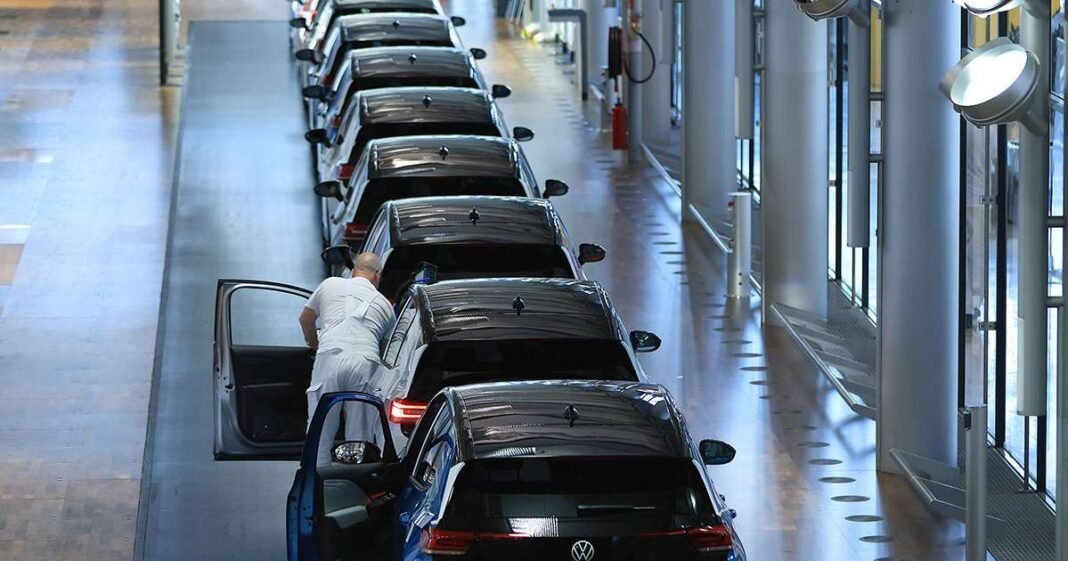

VW ID.3 compact hatchback electric vehicle production line at the Volkswagen factory in Dresden, Germany. (Krisztian Bocsi/Bloomberg)
February 4, 2026 5:21 PM, EST
Two of Europe’s biggest auto manufacturers, Volkswagen AG and Stellantis NV, are pressuring the European Union to better protect the bloc’s troubled auto industry amid heightened geopolitical tensions and intense competition from Chinese manufacturers.
The EU should introduce carbon dioxide bonuses for vehicles made in Europe as a way to protect jobs and help local manufacturers meet climate targets, the chief executives of Stellantis and Volkswagen wrote in an editorial published late Feb. 4 by the French daily Les Echos and two other media outlets.
“Europe is witnessing the emergence of new geopolitical rivalries,” Antonio Filosa, CEO of Stellantis, and Oliver Blume, CEO of rival Volkswagen, wrote. “Trade, technology and industrial capabilities are being mobilized more than ever to serve national interests. The European Union must choose its path quickly,” they said.
France is among the countries that have been pushing for a so-called EU preference for electric vehicles as Brussels draws up new proposals for the auto industry. The European Commission, the EU’s executive arm, was due to decide on possible new ‘Made in Europe’ rules in January, but the topic remains divisive, and the decisions have been delayed by at least a month.
RELATED: 6 Nations Challenge EU’s Combustion Car Deadline
Stellantis, the owner of Fiat and Peugeot, is among the manufacturers that criticized changes the EU Commission proposed so far to soften the impact of a costly shift to electrification for the region’s carmakers.
The challenges faced by companies seeking to manufacture EV battery cells in Europe well illustrate the EU’s dilemma, Blume and Filosa wrote in the editorial.
“We are investing heavily to build an integrated European sector, essential for our technological sovereignty, but consumers legitimately expect affordable electric vehicles,” the two executives wrote. “However, the more prices need to be kept down, the greater the need to import the cheapest batteries.”
Filosa, who is conducting a widespread review of Stellantis’s global operations, is considering resizing or terminating some battery joint ventures amid soft demand for battery-powered vehicles, Bloomberg reported earlier Feb. 4.

