
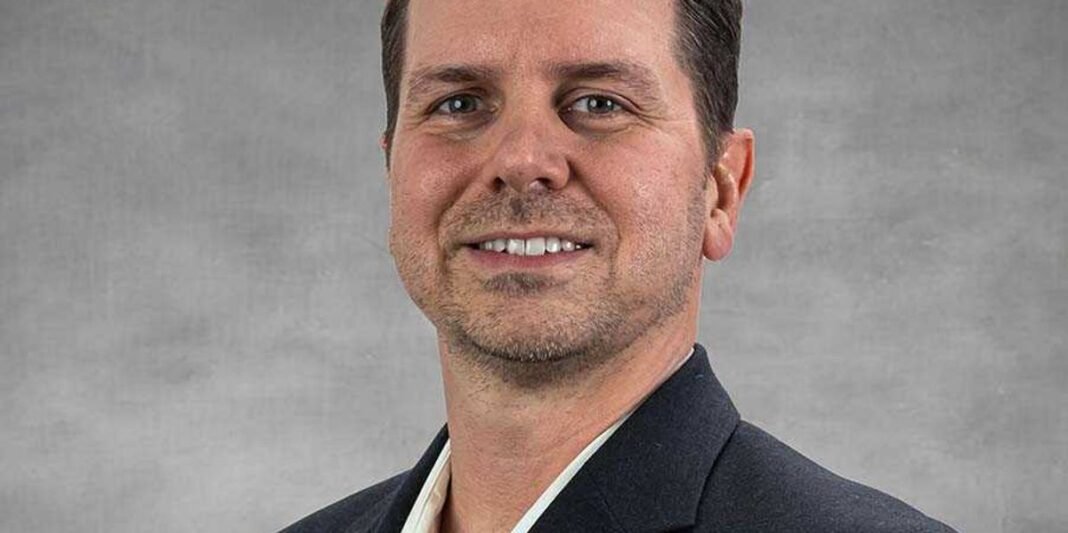

James Cirigliano is vice president of marketing for Diversified Labeling Solutions (DLS), one of the nation’s largest label manufacturers, as well as its parent company, TSC Auto ID Americas. He began his career in 3D animation and visual effects, and worked as a visual effects supervisor and director in Chicago’s advertising industry before transitioning into marketing. For the past 14 years, he has guided DLS through a full rebrand, built in-house video production capabilities, and developed innovative customer education tools. In 2023, Cirigliano expanded his leadership role to TSC Auto ID Americas, where he continues to build and mentor marketing teams.
Q: How would you describe the current status of the labeling industry?
A: The labeling industry is experiencing a period of transformation. Demand for labels continues to grow, fueled by e-commerce, retail, health-care, food distribution, and logistics applications. At the same time, new technologies, such as linerless labels, RFID [radio-frequency identification], and sustainability-focused materials, are reshaping expectations. Customers want labels that not only perform reliably but also support efficiency, traceability, and environmental responsibility. This puts pressure on converters and suppliers to innovate while maintaining consistent quality and speed to market.
Q: Diversified Labeling Solutions is celebrating its 40th anniversary. To what do you attribute the lasting success of your organization?
A: Our success over four decades comes down to three things: our people, our commitment to our distribution partners, and our focus on innovation. From the beginning, DLS has worked exclusively through the channel, making us a trusted partner for resellers and distributors across the country. We’ve invested in cutting-edge technology and expanded our capabilities, but at the core, it’s always been about relationships, service, and delivering the highest-quality products that help our partners grow their businesses.
Q: You have five facilities nationwide. How does that distribution network help you serve your customer base?
A: Our five strategically located facilities allow us to serve customers with speed, efficiency, and redundancy. Having plants in multiple regions reduces shipping costs and leadtimes while providing backup capacity that ensures business continuity. This national footprint helps our distributors stay competitive by allowing them to meet customer demands quickly, regardless of location.
Q: Is the time now ripe for RFID to finally make an impact on warehouse operations?
A: Yes. We’re at a tipping point where the cost of RFID technology has come down and the value of data visibility has gone up. With the rise of e-commerce and supply chain complexity, companies need real-time visibility into inventory, assets, and workflows. RFID provides that level of detail. What’s more, retailers and logistics service providers are beginning to mandate RFID labeling in certain applications, which is accelerating adoption across warehouses and distribution centers.
Q: Why is quality data critical to good labeling practices?
A: Labels are only as good as the data that drives them. Bad data equals bad labels. A label with inaccurate or incomplete information can lead to mis-shipments, compliance issues, or even safety hazards. High-quality, accurate data ensures that labels do their job—whether that’s tracking an asset or meeting regulatory requirements. As supply chains become increasingly data-driven, the role of accurate labeling has never been more critical.
Q: How is artificial intelligence affecting the labeling industry?
A: AI is the quiet disruptor in labeling. From automating data validation to predicting maintenance in production, AI is cutting errors and increasing efficiency. Over time, AI will help supply chains anticipate labeling needs before they arise, making operations more proactive than reactive.
Q: In what ways can good warehouse signage improve productivity and safety?
A: Clear, durable signage is vital for both efficiency and safety in warehouse operations. Well-designed signage helps employees navigate faster, reduces picking errors, and keeps workflows organized.
Just as importantly, safety signage ensures compliance with regulations and prevents accidents by clearly communicating hazards and procedures. In fast-paced warehouse environments, good signage is as important as good labeling—it keeps people safe while keeping products moving.
Q: How is sustainability shaping the future of labeling?
A: Sustainability is one of the biggest forces shaping our industry. It is no longer optional—it’s expected. Customers are increasingly asking for ecofriendly solutions such as thinner liners, recyclable materials, and linerless labels. At DLS, we’ve launched our Ecologic product line to meet these needs, and we’ve even partnered with organizations that plant trees for every case of sustainable labels sold. Sustainability is no longer a “nice-to-have”—it’s becoming an expectation, and we’re committed to leading in that space.

