
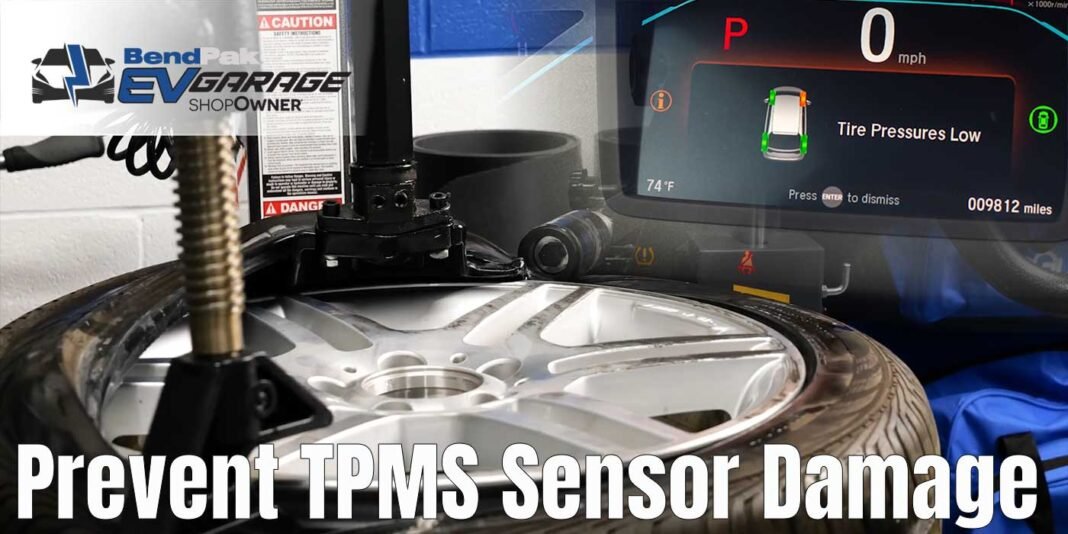

The first step to installing tires isn’t removing the wheels; it’s inspecting the TPMS sensors. When the vehicle pulls into the bay, look at the dashboard for the TPMS light. Then, use your TPMS tool to confirm that the sensors transmit when prompted.
This step prevents customers from claiming you damaged the TPMS system. It also helps capture the sensor IDs if you need to program a new sensor later. Once you’ve confirmed the sensors work properly, you can begin breaking down the wheel assemblies.
Know the Evolution of TPMS Systems
In the early days of TPMS, many applications used clamp-on sensors secured with a nut. Technicians often removed the nut and let the sensor fall into the center of the tire before dismounting. The logic made sense at the time, but it caused problems. Sensors frequently got lost or damaged by the shovel or lever during removal.
Today’s snap-in valve stems make dropping the sensor impossible, which means technicians must rely on precise tool and bead management to avoid TPMS sensor damage.
Manage the Bead and Tools Carefully
Avoiding damage comes down to knowing where the sensor sits relative to the bead and your tools. Let’s walk through the step-by-step process of replacing a TPMS sensor.
First, remove the valve stem core to let the air escape. Use the shovel on the side of the machine to unseat the bead, starting 180 degrees opposite the valve stem. When you reach the sensor, dig about six inches on either side with the shovel. Keep an eye on the bead, sensor, and drop center at all times.
Once the wheel assembly is secured on the turntable and the duck head adjusted, locate the valve stem and sensor. The sensor should rest between the four and six o’clock positions. Insert your tire iron and pull the bead over the duck head.
Use Modern Equipment To Prevent TPMS Sensor Damage
Modern tire changers help prevent TPMS sensor damage through advanced bead management. Machines equipped with a left-side ram can hold the bead in the drop center while the turntable rotates. This keeps the bead far from the sensor throughout the process.
Using this method during dismounting (and later, mounting) can protect the sensor from contact and breakage. The same technique applies when reseating the bead: always keep the bead opposite the sensor in the drop center.
Test Before You Touch
Another key practice is to perform a “test before you touch” inspection, a Tire Industry Association–recommended method. This test helps identify TPMS issues before removing the wheel or tire. It also protects you from customer disputes and creates new service opportunities.
When you verify sensor function ahead of time, you can offer replacements or reprogramming before completing the tire job. That proactive step reduces comebacks caused by a TPMS light appearing after installation.
Stay Aware and Use the Right Tools
The main takeaway is awareness. Always track the sensor’s position in relation to your bead and tools. Modern tire changers are designed for today’s larger wheel assemblies and sensitive TPMS sensors. Using them correctly ensures a safe, damage-free process for both the sensor and the tire.
This video is sponsored by BendPak.

